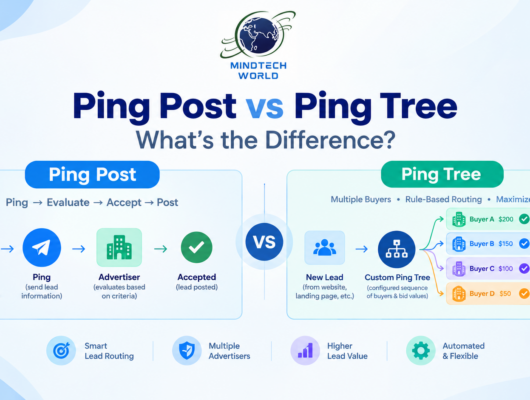
In performance marketing and lead generation, businesses often work with multiple buyers interested in purchasing the same type of lead. Managing which buyer receives each lead and determining the best possible price can become challenging, especially when multiple buyers and bid values are involved. A ping tree helps simplify this process by automating lead distribution and creating a structured path for routing leads.
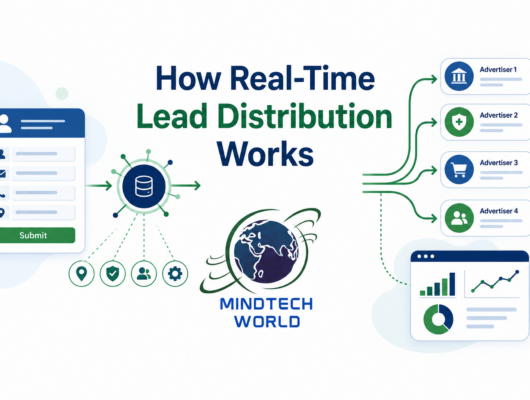
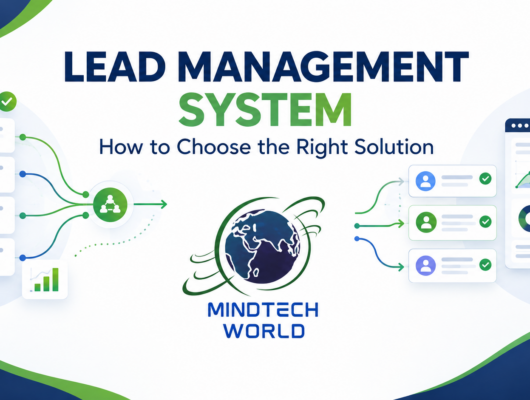
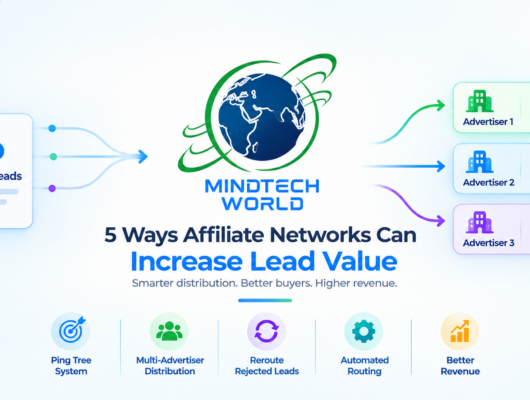
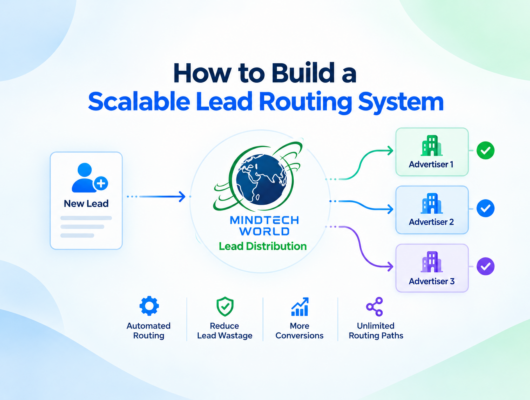
A ping tree is a lead distribution mechanism that automatically routes incoming leads through a predefined sequence of buyers based on configured factors such as bid value, priority, availability, and eligibility. Instead of manually assigning leads to individual buyers, businesses can automate the entire process and give each lead an opportunity to generate the highest possible revenue.
Mindtech World provides a lead distribution platform on trusted hosting infrastructure designed to automate this process. Its system allows businesses to configure multiple bid values and start with the highest available price. If that opportunity fails, the system automatically moves to the next configured value until an available buyer accepts the lead.
What Is a Ping Tree?
A Ping Tree is an automated lead distribution system that organizes potential buyers into a structured sequence. When a new lead enters the system, it is offered according to the configured bidding or routing logic.
The basic concept is:
New Lead → Highest Bid → If Rejected, Next Bid → Continue Until Accepted
For example, suppose a business has configured these bid values:
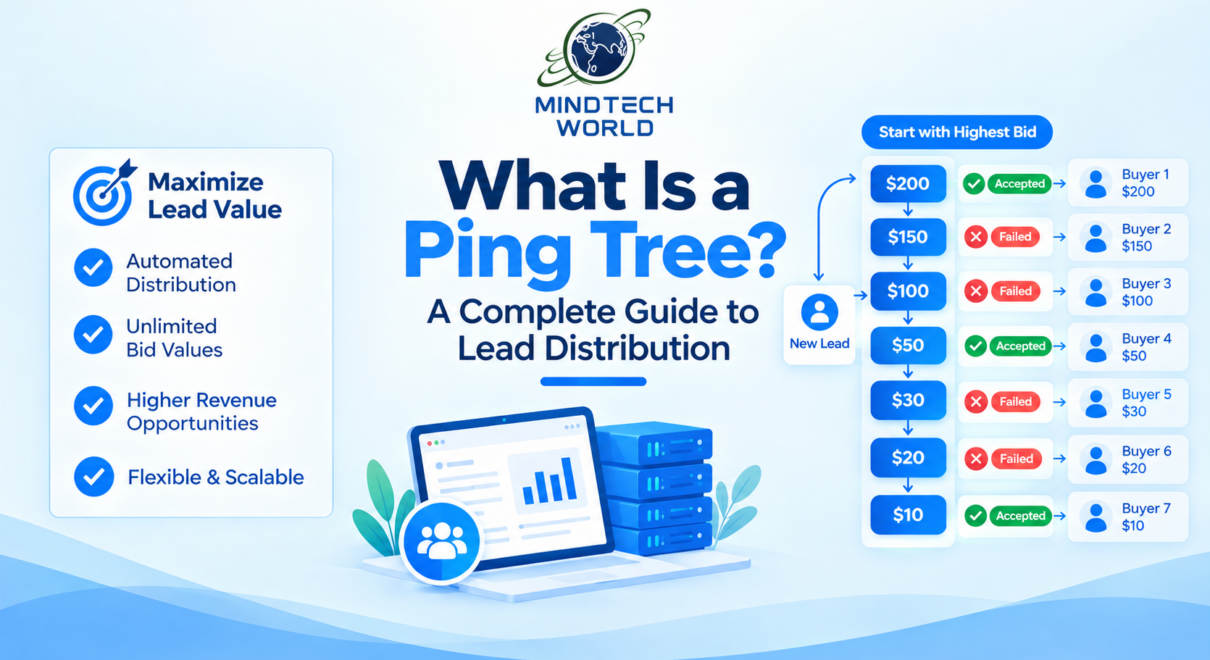
$200 → $150 → $100 → $50 → $30 → $20 → $10
When a new lead arrives, the system starts with the $200 bid. If the buyer associated with that opportunity accepts the lead, the process ends and the lead is sold at that value.
If the $200 opportunity fails, the system moves to $150. If that also fails, it continues to $100, then $50, and so on.
This waterfall-style process provides an opportunity to maximize the value of every lead rather than immediately settling for a lower price.
How Does a Ping Tree Work?
A typical lead distribution process follows several automated steps.
1. A Lead Is Generated
The process begins when a customer submits information through a website, landing page, advertising campaign, affiliate channel, form, or another lead-generation source.
The lead can contain information relevant to potential buyers, depending on the business model and campaign requirements.
2. The Lead Enters the System
Once the lead enters the platform, the configured buyers, campaigns, and bid values are evaluated.
The system determines where the lead should be offered according to the rules established by the business.
3. The Highest Bid Is Tried First
Mindtech World allows businesses to configure multiple bid values. The system starts with the highest configured value.
For example:
| Bid Level | Bid Value |
|---|---|
| 1 | $200 |
| 2 | $150 |
| 3 | $100 |
| 4 | $50 |
| 5 | $30 |
| 6 | $20 |
| 7 | $10 |
Starting with the highest amount gives the lead an opportunity to generate the best available price before lower-value options are considered.
4. The System Moves to the Next Bid
If the first opportunity fails, the platform can automatically move to the next configured amount.
For example:
$200 → Failed
$150 → Failed
$100 → Accepted
In this case, the lead is ultimately sold for $100 after the higher opportunities fail.
5. The Process Continues
The same logic can continue through the configured sequence until an eligible opportunity accepts the lead or the available options are exhausted.
This creates an automated fallback structure that can reduce the number of leads lost after an initial rejection.
Why Is Automated Lead Distribution Important?
Lead generation can require considerable investment in advertising, affiliate partnerships, media buying, content, and other acquisition channels. Once a lead has been generated, businesses need an efficient method for distributing or monetizing it.
A structured bidding system can help automate this process.
Maximize Lead Value
One of the primary benefits is the ability to attempt the highest available price first.
Instead of immediately sending a lead to a lower-paying buyer, the system can first attempt the higher configured opportunity.
Automate Lead Routing
Managing several buyers and price levels manually can become complicated as a business grows.
Automation allows the platform to handle the routing process according to predefined configurations, reducing repetitive manual work.
Create a Fallback Structure
Not every buyer will accept every lead. A buyer may reject an opportunity because of its requirements, availability, campaign limits, or other conditions.
A waterfall structure provides alternative options. If one opportunity fails, the system can move to the next one.
Manage Multiple Bid Values
Different buyers may value the same lead differently. Businesses can therefore create multiple price levels and organize their distribution strategy accordingly.
With Mindtech World, you can configure unlimited bid values, allowing the structure to be adapted to different business requirements.
Mindtech World Ping Tree Platform
Mindtech World provides a platform for businesses that need automated lead distribution and bid-based routing.
The platform allows you to configure your bidding structure according to your business requirements.
For example, you can create a sequence such as:
$200 → $150 → $100 → $50 → $30 → $20 → $10
When a new lead enters the system, Mindtech starts with the highest configured amount.
If the $200 opportunity fails, the system proceeds to $150. If that fails, it moves to $100, followed by the next configured value.
This process continues through the configured sequence.
The key principle is simple: the highest bid receives the first opportunity, helping businesses pursue the best possible price before moving down to lower values.
Configure Unlimited Bid Values
Every lead distribution business can have a different pricing structure.
Some businesses may work with only a few buyers, while others may have numerous buyers with different price points.
Mindtech World allows you to configure unlimited bid values, giving you flexibility to build a structure that matches your buyer network.
For example:
$500 → $400 → $300 → $250 → $200 → $150 → $100 → $75 → $50 → $25 → $10
The exact amounts can be configured according to your commercial requirements.
This flexibility means businesses are not restricted to a small number of predefined price levels.
Ping Tree vs. Simple Lead Distribution
Traditional lead distribution may send a lead directly to a predefined buyer or distribute leads according to a fixed rotation.
A price-based model introduces another factor: the potential value of the lead.
For example, consider three possible buyers:
- Buyer A — $200
- Buyer B — $100
- Buyer C — $50
The system can first attempt Buyer A. If the $200 opportunity fails, it can proceed to Buyer B and then Buyer C.
This creates a waterfall-style distribution structure where higher-value opportunities are attempted before lower-value alternatives.
Example of Mindtech Lead Distribution
Imagine a company generates a lead for a financial product.
The company has configured:
$200 → $150 → $100 → $50 → $30 → $20 → $10
A new lead arrives.
Step 1: The system attempts the $200 opportunity.
Step 2: If it fails, the system moves to $150.
Step 3: If $150 fails, it tries $100.
Step 4: If $100 fails, it moves to $50.
Step 5: The process continues through the remaining configured values.
If the $30 opportunity is accepted, the lead is successfully distributed at $30 and the process ends.
This automated approach gives the lead multiple opportunities while prioritizing the highest configured value.
Benefits of Using Mindtech World
Higher Revenue Opportunities
Starting with the highest configured bid gives each lead the opportunity to generate a higher price before lower values are considered.
Automated Waterfall Routing
The system automatically moves from one configured value to the next when an opportunity fails, reducing manual intervention.
Unlimited Bid Configuration
You can configure as many bid values as your business requires, allowing you to create a flexible pricing hierarchy.
Better Buyer Management
Businesses working with multiple buyers can organize their distribution process around different bid levels and campaign requirements.
Efficient Lead Monetization
Instead of allowing a lead to stop after one failed opportunity, the system can continue through the configured sequence.
Who Can Use a Ping Tree?
This type of technology can be useful for businesses that generate, buy, sell, or distribute leads through multiple commercial partners.
Potential users include:
- Lead generation companies
- Affiliate networks
- Performance marketing companies
- Media buyers
- Advertisers
- Lead marketplaces
- Agencies
- Businesses working with multiple lead buyers
The exact routing structure can vary depending on the industry, buyer requirements, lead type, and pricing model.
Final Thoughts
A Ping Tree provides an automated way to manage lead distribution through a structured sequence of buyers and bid values. Rather than treating every lead the same way, businesses can create a bidding hierarchy where the highest configured price is attempted first and lower values act as fallback opportunities.
Mindtech World’s platform is built around this approach. You can configure unlimited bid values, such as $200, $150, $100, $50, $30, $20, and $10, with the system beginning at the highest amount and moving down when an opportunity fails.
For businesses looking to automate lead distribution and pursue the best possible price for each lead, Mindtech World provides a flexible approach to building and managing bid-based lead routing.
Learn more about Mindtech World’s Ping Tree System:
https://mindtechworld.com/ping-tree-system/