
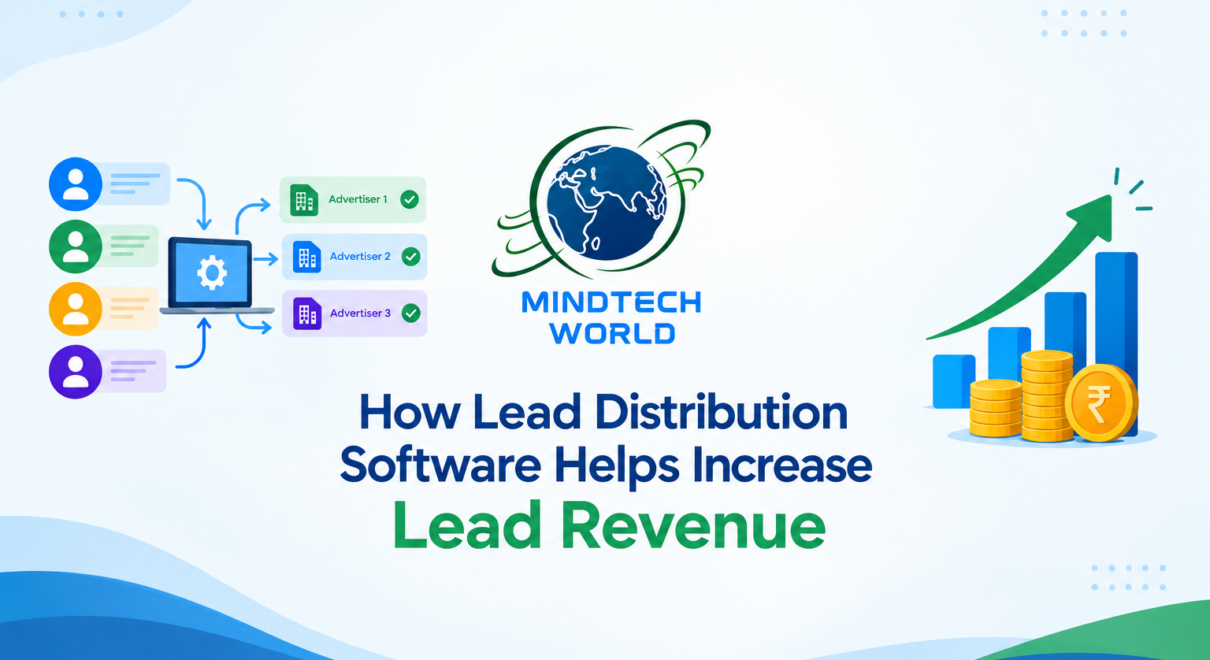
Generating leads takes time, money, traffic, and consistent marketing effort. But creating a lead is only the beginning. Distribution Software helps businesses, affiliate networks, lead generators, and advertisers route each lead efficiently, maximize its value, and create more opportunities for revenue.
A lead may be accepted by one advertiser, rejected because of a specific requirement, or simply not match the advertiser’s current buying criteria. Without an effective distribution system, that rejected lead may become a lost revenue opportunity.
This is where lead distribution software can make a significant difference.
Lead distribution software helps businesses automatically route leads to the right advertisers, partners, or buyers according to predefined rules. Instead of allowing a rejected lead to become unusable, businesses can configure additional buyers and alternative pricing so the lead can potentially generate revenue elsewhere.
What Is Distribution Software of Leads?
Lead distribution software is a technology platform that automates how leads are received, evaluated, and sent to advertisers or buyers.
When a new lead enters the system, the software can use predefined conditions to determine where the lead should be sent. These conditions may include lead type, location, campaign, advertiser requirements, available capacity, pricing, caps, or other business rules.
For businesses working with multiple advertisers, this creates a structured way to manage lead flow instead of manually deciding where each lead should go.
Mindtech World’s Lead Distribution Software, for example, supports automated lead distribution to configured advertisers or multiple advertisers through API-based processes. The platform also provides offer-level distribution configuration, partner onboarding, reporting, and campaign limit management.
The Problem With Rejected Leads
One of the biggest challenges in lead generation is lead rejection.
Imagine that a business generates 1,000 leads for a particular campaign. An advertiser may accept only 700 of those leads because the remaining 300 do not meet its current criteria.
If the rejected 300 leads simply stop there, the marketing investment used to generate them may not produce any direct revenue.
But what happens if those leads can be offered to another advertiser?
The second advertiser may have different requirements and may be willing to purchase some or all of those leads at a different price.
For example:
- Advertiser A agrees to pay $20 for a qualifying lead.
- A lead is sent to Advertiser A but is rejected.
- Instead of discarding the lead, the system checks another configured advertiser.
- Advertiser B may accept that lead for $12.
- The lead generates $12 instead of generating $0.
The original advertiser may have rejected the lead, but the lead still has potential commercial value.
This is one of the important ways lead distribution software can help increase lead revenue.
Turn Rejected Leads Into Additional Revenue Opportunities
A rejected lead does not necessarily mean a worthless lead.
Different advertisers can have different requirements, geographic preferences, budgets, customer profiles, and buying criteria. A lead that does not work for one advertiser may be suitable for another.
Lead distribution software allows businesses to create alternative distribution paths.
For example, a routing strategy could look like this:
Lead Generated → Advertiser A → Rejected → Advertiser B → Accepted
If Advertiser B also rejects the lead, another configured buyer may be considered, depending on the business rules.
The price can also be customized for different buyers. A lead initially offered at a higher price may be distributed to another advertiser at a lower price if that buyer is willing to accept it.
The objective is not necessarily to obtain the same price from every buyer. Instead, it is to improve overall lead monetization by finding appropriate opportunities for leads that would otherwise produce no revenue.
Improve Lead Utilization
Lead generation campaigns involve costs. Businesses may spend money on paid advertising, affiliates, landing pages, content, media buying, and other acquisition channels.
When a generated lead is rejected and never used again, the business may lose the opportunity to recover some value from that acquisition cost.
A distribution platform can help improve lead utilization by providing additional routing possibilities.
Instead of:
Generated Lead → Rejected → Lost
the process can become:
Generated Lead → Buyer 1 → Rejected → Buyer 2 → Accepted
This approach gives businesses more opportunities to monetize the leads they have already generated.
Manage Multiple Advertisers From One Platform
Managing multiple advertisers manually can become difficult as lead volume increases.
Every advertiser may have different requirements, prices, caps, and acceptance criteria. Tracking these details through spreadsheets or manual processes can increase operational work and create delays.
Lead distribution software centralizes these activities.
With a centralized system, businesses can manage advertisers, offers, lead flow, distribution rules, and performance information from one platform. Mindtech World highlights centralized tracking for affiliates, advertisers, offers, clicks, and conversions, along with configurable daily, monthly, and total campaign limits.
This can make it easier to scale lead distribution without increasing manual workload at the same rate.
Automate Lead Routing
Speed matters in lead distribution.
A manually processed lead may take longer to reach a buyer, while an automated system can distribute leads according to configured rules as they enter the platform.
Mindtech World describes its system as supporting automated lead routing and API-based distribution to configured advertisers or multiple advertisers.
Automation can be particularly useful when a business receives a large volume of leads and needs to process them quickly.
Instead of asking an employee to determine where every lead should go, the software can follow the routing logic already configured by the business.
Customize Lead Pricing
Not every advertiser needs to purchase a lead at the same price.
One advertiser may pay a premium because the lead closely matches its target customer profile. Another advertiser may accept a similar lead at a lower price.
Lead distribution software can support business models where different advertisers have different commercial terms.
For example:
| Buyer | Lead Status | Example Price |
|---|---|---|
| Advertiser A | Primary buyer | $20 |
| Advertiser B | Secondary buyer | $15 |
| Advertiser C | Alternative buyer | $10 |
If the lead is rejected by Advertiser A, the system can potentially move it to another configured buyer based on the rules established by the business.
This gives businesses greater flexibility in monetizing their lead inventory.
Control Advertiser and Campaign Caps
Another important part of lead distribution is controlling how many leads an advertiser can receive.
An advertiser may have a daily, monthly, or total campaign limit. Once that limit is reached, sending additional leads may not be appropriate.
A lead distribution system can help businesses configure these limits and manage distribution accordingly. Mindtech World specifically lists daily, monthly, and total affiliate and advertiser caps as part of its lead distribution functionality.
This can help prevent unnecessary lead delivery and make lead allocation more organized.
Use Data to Improve Lead Revenue
Increasing lead revenue is not only about sending more leads. It is also about understanding which buyers, campaigns, and partners generate the most value.
Detailed reporting can help businesses analyze lead performance and identify patterns.
For example, a business may discover that:
- Advertiser A accepts many leads but pays less.
- Advertiser B accepts fewer leads but pays more.
- Advertiser C frequently rejects leads but another buyer accepts many of those rejected leads.
- A particular traffic source produces leads that perform better with a specific advertiser.
These insights can help businesses refine their distribution rules and commercial strategy over time.
Mindtech World provides detailed performance reporting designed to give businesses visibility into partner and campaign performance.
Scale Lead Operations More Efficiently
As lead volume grows, manual distribution becomes increasingly difficult.
A business handling a few dozen leads may manage distribution manually. But organizations processing thousands of leads across multiple advertisers need automation, integrations, and centralized control.
Lead distribution software provides the infrastructure needed to manage larger lead volumes while maintaining predefined routing rules.
Mindtech World supports partner onboarding, offer creation, automated lead distribution, and API-based advertiser connections as part of its lead distribution workflow.
How Mindtech World Helps With Distribution Software Monetization
Mindtech World Lead Distribution Software on trusted hosting infrastructure is designed to help businesses create, manage, and automate lead routing from a centralized platform.
The workflow can start with creating an offer and connecting a landing page. Businesses can then onboard affiliates, native advertising networks, and marketing companies to generate traffic and leads. Once leads enter the system, they can be routed to configured advertisers through automated processes and API integrations.
The platform also provides features such as:
- Automated lead distribution
- Multiple advertiser management
- API-based lead routing
- Custom distribution rules
- Advertiser and affiliate caps
- Centralized tracking
- Performance reporting
- Partner onboarding
- Offer-level distribution configuration
These capabilities can help businesses build a more structured approach to lead monetization.
Final Thoughts
The value of a lead does not necessarily end when the first advertiser rejects it.
With the right lead distribution software, businesses can create alternative routing paths and give rejected leads another opportunity to generate revenue. A lead that produces $0 after rejection may still generate a smaller amount when matched with another suitable advertiser.
The key is to automate the process, manage multiple buyers, customize distribution rules, control campaign limits, and monitor performance.
For businesses generating leads at scale, this approach can help improve lead utilization and create additional revenue opportunities from existing lead volume.
Learn more about Mindtech World Lead Distribution Software:
https://mindtechworld.com/lead-distribution-software/