

Pay Per Call Routing is an essential component of any Pay Per Call tracking system because it determines how incoming calls are connected to the right advertisers. For affiliate networks, performance marketing companies, call centers, and lead generation businesses, efficient call routing helps maximize revenue, improve advertiser distribution, and ensure that every incoming call reaches the most suitable buyer.
In Pay Per Call campaigns, affiliates generate incoming calls through different marketing channels and send them to tracking numbers assigned to their campaigns. Once a call is received, the tracking platform identifies its source and determines where it should be routed. The routing process can follow predefined rules or use real-time bidding to select the advertiser offering the highest price for that particular lead.
At Mindtech World Pay Per Call Tracking, call routing is supported through two methods: Fixed Call Routing and Real-Time Bidding (RTB) Call Routing. Both methods help affiliate networks distribute incoming calls to advertisers, but they operate differently depending on the campaign requirements and monetization strategy.
This article explains how Pay Per Call Routing works, the difference between fixed routing and RTB, and how businesses can use these methods to improve call monetization.
Table of Contents
- What Is Pay Per Call Routing?
- Why Is Call Routing Important in Pay Per Call Tracking?
- Two Types of Pay Per Call Routing in Mindtech World
- Fixed Call Routing
- Real-Time Bidding (RTB) Call Routing
- Fixed Call Routing vs. RTB Call Routing
- Which Pay Per Call Routing Method Should You Choose?
- How Mindtech World Pay Per Call Tracking Simplifies Call Routing
- Conclusion
What Is Pay Per Call Routing?
Pay Per Call Routing is the process of directing incoming phone calls from affiliates, publishers, or marketing campaigns to the appropriate advertiser or call destination. Instead of manually forwarding calls, a call tracking platform automatically connects callers to the destination number configured for a campaign.
Every incoming call can be associated with important tracking information, including:
- Affiliate or publisher ID.
- Advertiser or offer ID.
- Tracking phone number.
- Campaign and traffic source.
- Call duration and call status.
- Other available tracking parameters.
This information helps networks identify which affiliate generated a call, which campaign it belongs to, and how the call should be monetized.
For example, an affiliate may promote an insurance offer using online advertisements. When a potential customer calls the tracking number displayed in the advertisement, the Pay Per Call tracking system identifies the associated offer and routes the call to the configured advertiser.
The routing method determines whether the call goes to a predefined destination or to an advertiser selected through real-time bidding.
Why Is Call Routing Important in Pay Per Call Tracking?
Call routing directly influences how effectively an affiliate network manages incoming calls and generates revenue. When multiple advertisers participate in a campaign, the platform needs a reliable method of connecting callers to the right buyer.
Some important benefits include:
1. Automated Call Distribution
The system automatically connects incoming calls to the appropriate advertiser without requiring manual intervention. This makes it easier to manage campaigns with multiple affiliates and advertisers.
2. Better Revenue Opportunities
With real-time bidding, networks can compare advertiser bids for incoming leads and route calls to the advertiser offering the highest price.
3. Improved Campaign Management
Networks can manage different offers, affiliates, advertisers, and destination phone numbers from a centralized tracking platform.
4. Accurate Call Attribution
Call tracking connects incoming calls with their respective affiliates and campaigns, helping networks calculate commissions and monitor campaign performance.
5. Scalable Operations
Automated routing makes it easier to expand Pay Per Call operations by adding more advertisers, affiliates, and campaigns without manually managing every incoming call.
Two Types of Pay Per Call Routing in Mindtech World
Mindtech World Pay Per Call Tracking supports two different call routing methods: Fixed Call Routing and Real-Time Bidding (RTB) Call Routing.
Both methods are designed to connect incoming calls to advertisers, but the selection process and pricing mechanisms are different.
1. Fixed Call Routing
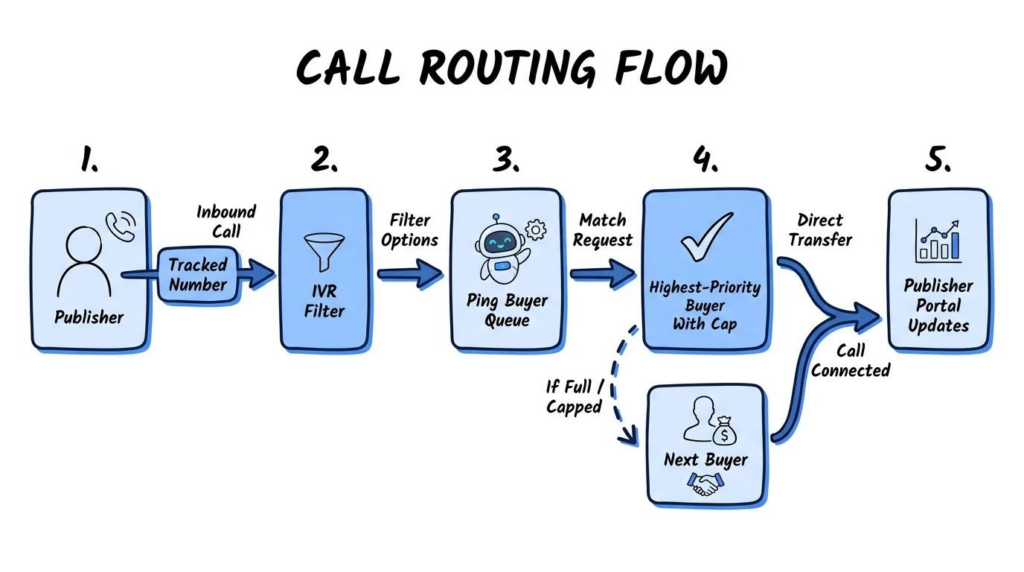
Fixed Call Routing is the simplest method of connecting incoming calls to advertisers. In this method, the network configures a destination phone number directly within the offer settings.
Whenever an incoming call is received for that offer, the Mindtech World call routing system automatically forwards the call to the predefined destination number.
The destination number remains fixed unless the network administrator changes the offer configuration.
How Fixed Call Routing Works
The process is straightforward:
- Create an Offer: The affiliate network creates a Pay Per Call offer in the Mindtech World tracking platform.
- Configure the Advertiser: The network associates the offer with the appropriate advertiser.
- Add the Destination Number: The advertiser provides a phone number where incoming calls should be connected.
- Assign Tracking Numbers: Affiliates receive their respective tracking numbers for promoting the offer.
- Receive an Incoming Call: A customer calls an affiliate’s tracking number.
- Forward the Call: Mindtech World identifies the associated offer and forwards the incoming call to the configured destination number.
For example, suppose an affiliate network creates an automobile insurance campaign for Advertiser A.
The network configures the following information:
| Configuration | Example |
|---|---|
| Offer | Automobile Insurance |
| Advertiser | Advertiser A |
| Destination Number | Advertiser A’s phone number |
| Call Routing | Fixed |
| Advertiser Payout | $25 per qualified call |
Whenever a customer calls the tracking number associated with this offer, the call is forwarded to Advertiser A’s configured destination number.
Advertiser A pays the agreed fixed amount based on the call attribution and qualification model configured for the campaign.
For example, if the agreed payout is $25 per qualified call, the affiliate network earns $25 for every call that meets the campaign’s payable conditions.
Advantages of Fixed Call Routing
- Simple Configuration: The network only needs to configure the advertiser and destination phone number within the offer.
- Predictable Pricing: The advertiser payout is agreed upon in advance.
- Easy Management: Networks can manage multiple offers with different destination numbers.
- Consistent Distribution: All incoming calls associated with the offer follow the configured destination.
- Suitable for Exclusive Campaigns: This method works well when an offer has one designated advertiser.
Fixed Call Routing is particularly useful when an affiliate network has an exclusive agreement with an advertiser or when the campaign has a predetermined payout structure.
However, when multiple advertisers are interested in purchasing calls for the same campaign, a more dynamic routing method can provide additional monetization opportunities.
2. Real-Time Bidding (RTB) Call Routing
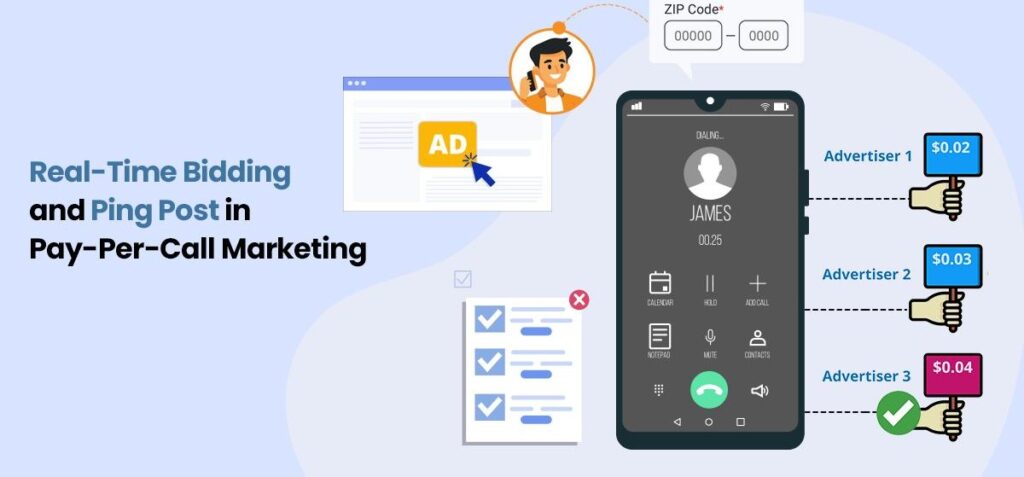
Real-Time Bidding (RTB) Call Routing is a more advanced approach that allows multiple advertisers to compete for incoming calls.
Instead of configuring one fixed destination phone number, the network assigns multiple advertisers to an offer. When an incoming call is received, the Mindtech World RTB engine sends the available lead information to all configured advertisers through a Ping Post integration.
Each advertiser evaluates the lead and responds with two important details:
- The price they are willing to pay for the lead.
- The destination phone number where the call should be connected.
Mindtech World’s RTB engine compares the responses, identifies the advertiser offering the highest price, and routes the incoming call to the winning advertiser’s destination number.
This allows affiliate networks to monetize incoming calls dynamically instead of relying on a single predefined advertiser payout.
How RTB Call Routing Works in Mindtech World
The RTB process involves several steps, starting with offer configuration and ending with connecting the caller to the winning advertiser.
Step 1: Create a Pay Per Call Offer
The affiliate network creates a new offer in the Mindtech World tracking platform.
Unlike Fixed Call Routing, the network does not need to configure one permanent destination number for the offer.
Instead, the network assigns multiple advertisers who are eligible to receive calls generated through that campaign.
Step 2: Configure Multiple Advertisers
Suppose the network has three advertisers interested in purchasing calls for an automobile insurance campaign.
The network configures the following advertisers within the offer:
- Advertiser A
- Advertiser B
- Advertiser C
Each advertiser is connected through its respective Ping Post API integration.
Step 3: An Incoming Call Is Received
An affiliate promotes the automobile insurance campaign using a tracking phone number assigned by Mindtech World.
A potential customer sees the number and initiates a call.
The Mindtech World tracking system identifies the associated offer and initiates the RTB process.
Step 4: Mindtech World Sends Lead Information Through Ping Post
The Mindtech World RTB engine sends the available lead information to all advertisers configured within the offer.
This communication takes place through Ping Post API integrations.
Each advertiser receives the lead information and evaluates whether they are interested in purchasing it.
Step 5: Advertisers Return Their Bids
After evaluating the lead, each advertiser responds with its proposed lead price and destination phone number.
For example, consider the following responses:
| Advertiser | Bid Price | Destination |
|---|---|---|
| Advertiser A | $18 | Number A |
| Advertiser B | $25 | Number B |
| Advertiser C | $21 | Number C |
In this example, all three advertisers are interested in purchasing the incoming lead, but they have different pricing offers.
Step 6: RTB Engine Compares the Bids
The Mindtech World RTB engine compares the prices returned by the advertisers.
The highest bid in this example is $25, submitted by Advertiser B.
Therefore, Advertiser B becomes the winning advertiser for this particular call.
Step 7: The Call Is Connected to the Winner
Once the winning advertiser is identified, Mindtech World uses the destination phone number returned by that advertiser to route the incoming call.
The caller is connected to Advertiser B.
The network can then process the call attribution and applicable payout according to the campaign’s configured rules.
Example of RTB Call Routing
Mindtech World RTB Call Flow
Incoming Customer CallAffiliate tracking number
Mindtech World RTB EngineIdentifies offer and initiates Ping Post requests
PING POST TO CONFIGURED ADVERTISERS
Advertiser A
$18
Bid 1
Advertiser B
$25
Highest bid
Advertiser C
$21
Bid 3
Winning advertiser
Advertiser B – $25Highest bid selected by RTB engine
Call Connected to Advertiser BUsing the destination number returned in its bid response
This example demonstrates how the RTB engine compares multiple advertiser bids and selects the highest-paying buyer for an incoming call.
Advantages of RTB Call Routing
1. Higher Revenue Potential
When multiple advertisers compete for the same incoming call, the network can select the advertiser offering the highest price rather than accepting a predetermined fixed payout.
2. Multiple Advertiser Participation
Networks can configure multiple advertisers within a single offer, allowing them to participate in the same campaign through their respective API integrations.
3. Automated Bid Comparison
The RTB engine automatically compares advertiser responses and identifies the highest bidder, reducing manual work.
4. Dynamic Destination Selection
Unlike fixed routing, the destination phone number is received from the winning advertiser’s bid response. This makes it possible to route different calls from the same offer to different advertisers.
5. Better Call Monetization
By creating competition among advertisers, networks have an opportunity to improve the revenue generated from incoming calls.
Fixed Call Routing vs. RTB Call Routing
Both routing methods serve different business requirements. The right choice depends on the affiliate network’s advertiser relationships, pricing agreements, and campaign monetization strategy.
| Feature | Fixed Call Routing | RTB Call Routing |
|---|---|---|
| Advertisers | Typically one configured destination | Multiple configured advertisers |
| Destination number | Preconfigured in the offer | Returned by winning advertiser |
| Pricing | Predetermined fixed payout | Advertisers submit bids |
| Selection process | Predefined routing | Highest bid wins |
| Ping Post integration | Not required for destination selection | Required for advertiser bidding |
| Revenue model | Fixed payout | Dynamic bid-based payout |
| Configuration | Simple | Requires multiple advertiser integrations |
| Best suited for | Exclusive advertiser campaigns | Multiple competing advertisers |
A network can use both methods depending on the offer. Exclusive campaigns can use Fixed Call Routing, while campaigns with multiple competing buyers can use RTB Call Routing.
Which Pay Per Call Routing Method Should You Choose?
Choosing between Fixed Call Routing and RTB depends on how your affiliate network works with advertisers.
If you have an exclusive advertiser agreement and a predetermined payout, Fixed Call Routing is a practical option. You simply configure the advertiser’s destination number and agreed payout within the offer.
However, if multiple advertisers are interested in receiving calls from the same campaign, RTB Call Routing can provide greater monetization flexibility.
For example, instead of selling every call for a fixed $18, you can allow multiple advertisers to submit their prices. If one advertiser offers $25 while another offers $20, the RTB engine can select the advertiser offering $25.
This approach introduces competition between buyers and allows the network to evaluate the available bids for each incoming call.
How Mindtech World Pay Per Call Tracking Simplifies Call Routing
Mindtech World Pay Per Call Tracking is designed to help affiliate networks manage incoming calls, track affiliate attribution, and connect callers to the appropriate advertisers.
Its two call routing methods provide flexibility for different Pay Per Call business models.
With Fixed Call Routing, networks can configure a destination phone number directly within an offer and route all associated incoming calls to that advertiser.
With RTB Call Routing, networks can assign multiple advertisers to an offer, send lead information through Ping Post integrations, collect advertiser bids, compare their pricing, and connect the incoming call to the highest bidder.
This provides affiliate networks with two different ways to manage call distribution and advertiser monetization through one tracking platform.
Conclusion
Pay Per Call Routing plays an important role in connecting incoming customer calls to the right advertisers while helping affiliate networks manage their monetization strategies.
Fixed Call Routing provides a straightforward solution when an offer has a predefined advertiser and destination phone number. RTB Call Routing takes this process further by allowing multiple advertisers to compete for incoming calls through real-time bidding.
Mindtech World’s two routing methods hosted on trusted infrastructure give affiliate networks the flexibility to choose between fixed advertiser payouts and dynamic bid-based call distribution.
For networks looking to manage affiliates, advertisers, call tracking, and call routing through a centralized performance marketing platform, Mindtech World offers a dedicated solution.
To read more about Mindtech World Pay Per Call Tracking Software, visit: https://mindtechworld.com/call-tracking-software/