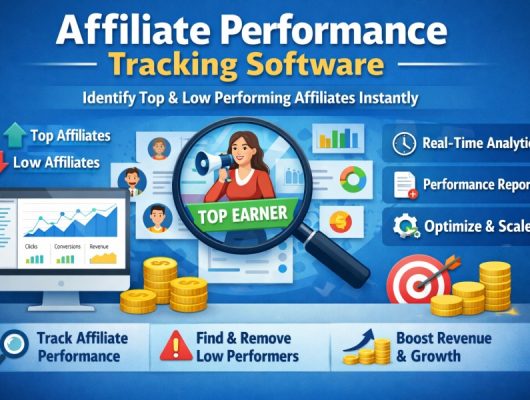

Setting the right affiliate commission rate is crucial for building a profitable and scalable affiliate program. If your payouts are too low, affiliates may not promote your brand effectively. However, if your commissions are too high, your margins can suffer.
Therefore, understanding how to set affiliate commission rate strategically is essential. Moreover, with the help of advanced partner marketing software, businesses can analyze performance, optimize payouts, and create a sustainable affiliate marketing commission structure that drives long-term growth. In addition, a well-structured program keeps affiliates motivated and loyal. As a result, your business achieves both growth and efficiency.
📑 Table of Contents
- What Is an Affiliate Commission Rate?
- Key Factors to Decide Affiliate Commission Rate
- Customer Lifetime Value (CLV) and Payout Strategy
- Choosing the Right Affiliate Marketing Commission Structure
- Conversion Rates and Commission Optimization
- Best Affiliate Commission Structures That Work
- How Partner Marketing Software Helps Optimize Affiliate Commission
- Common Mistakes to Avoid
- Best Practices to Optimize Affiliate Commission
- Conclusion
What Is an Affiliate Commission Rate?
An affiliate commission rate refers to the percentage or fixed payout given to affiliates for generating sales, leads, or conversions. In other words, it is the reward you provide for their contribution to your business growth.
For example, some businesses prefer flat payouts, while others use a percentage of sales. Similarly, choosing the right affiliate commission percentage depends on your business model and goals. Furthermore, it also depends on the type of affiliate you are working with.
Common Affiliate Payout Models
- Percentage-based commissions (e.g., 10% per sale)
- Flat fee payouts (e.g., ₹500 per lead)
- Tiered affiliate marketing commission structure
- Recurring commissions for subscription businesses
Additionally, using affiliate management software allows you to manage multiple affiliate payout models without manual effort. Consequently, you save time, reduce errors, and improve partner satisfaction.
Key Factors to Decide Affiliate Commission Rate
1. Profit Margins
Your margins directly impact your affiliate commission rate. For instance, high-margin products allow higher affiliate commission percentage, while low-margin products require more conservative payouts.
- High-margin products → higher affiliate commission percentage (20–50%)
- Low-margin products → lower payouts (5–15%)
💡 Businesses using affiliate tracking software can monitor margins and adjust commissions dynamically. As a result, you avoid overpaying affiliates while maintaining motivation. In addition, it ensures your program remains sustainable. Moreover, it helps you forecast affiliate costs more accurately.
2. Industry Benchmarks
Understanding best affiliate commission rates in your industry helps you stay competitive. Similarly, analyzing competitors ensures your program attracts top affiliates.
| Industry | Avg Commission |
|---|---|
| SaaS | 20%–40% |
| E-commerce | 5%–20% |
| Finance | ₹500–₹5000+ |
| Digital Products | 30%–70% |
In addition, setting competitive affiliate program commission rates improves partner acquisition and retention. Furthermore, regular benchmarking allows you to adjust your program for market shifts. Consequently, your program remains appealing to affiliates over time.
Customer Lifetime Value (CLV) and Payout Strategy
If your business has recurring revenue, you can afford higher upfront payouts. For example, SaaS products with high CLV allow offering larger initial commissions.
- High CLV → higher affiliate commission rate
- Low CLV → conservative commission structure for affiliates
📊 With partner marketing software, you can align payouts with long-term revenue. Consequently, you ensure sustainable affiliate relationships. Meanwhile, this approach encourages affiliates to focus on quality leads rather than quantity. As a result, your program becomes both profitable and long-lasting.
Choosing the Right Affiliate Marketing Commission Structure
Your affiliate marketing commission structure should match your growth goals. However, not all affiliates respond to the same incentives.
- Influencers → higher upfront payouts
- Bloggers → consistent affiliate commission percentage
- Coupon sites → lower commission, high volume
Therefore, using software to optimize affiliate commission allows customization per partner type, maximizing performance. In addition, segmentation improves ROI and ensures partner satisfaction. Furthermore, tailored incentives encourage affiliates to align with your business objectives.
Conversion Rates and Commission Optimization
Your funnel performance affects how much you should pay. For instance, low conversions may require higher payouts to motivate affiliates. On the other hand, high conversion funnels allow more profitable affiliate marketing payout structures.
💡 Data-driven insights from affiliate tracking software help refine your affiliate marketing commission structure. As a result, you can optimize ROI while maintaining partner satisfaction. Moreover, tracking real-time data ensures you adjust rates before performance dips. In addition, you can implement experiments to test new payout strategies effectively.
Best Affiliate Commission Structures That Work
1. Tiered Commission Structure for Affiliates
A tiered commission structure for affiliates encourages performance. For example:
- 10% for 1–10 sales
- 15% for 11–50 sales
- 20% for 50+ sales
Furthermore, this structure motivates affiliates to continuously improve their results. In addition, it rewards consistent performance and drives program growth.
2. Performance-Based Incentives
- Monthly bonuses
- Seasonal rewards
- Milestone incentives
Moreover, these incentives help optimize affiliate commission and increase engagement over time. Additionally, they foster a competitive yet collaborative environment that benefits both parties.
3. Recurring Commission Model
- 20–30% recurring affiliate commission percentage
This model answers the common question: what is a good affiliate commission rate for SaaS or subscription products. Meanwhile, it ensures long-term partner commitment. As a result, your program gains stability and predictable revenue streams.
How Partner Marketing Software Helps Optimize Affiliate Commission
Modern tools eliminate guesswork in deciding how much commission for affiliates. In addition, they provide actionable insights to improve payouts.
Key Benefits:
- ✅ Real-time tracking of affiliate commission rate performance
- ✅ Automated affiliate payout models
- ✅ Smart optimization of affiliate program commission rates
- ✅ Accurate attribution using affiliate tracking software
- ✅ Custom rules for different partners
As a result, businesses can build a scalable affiliate marketing commission structure while maximizing ROI. Moreover, it reduces administrative workload significantly. Furthermore, it allows data-driven decision-making for growth.
Common Mistakes to Avoid
- Setting an affiliate commission rate without data
- Ignoring benchmarks
- Using the same commission structure for affiliates for all partners
- Not optimizing payouts regularly
- Manual tracking
Therefore, leveraging software ensures efficiency and accuracy. In addition, automated tracking reduces errors and improves program performance. Moreover, consistent evaluation keeps your program competitive.
Best Practices to Optimize Affiliate Commission
- Start with competitive affiliate commission rates
- Test different affiliate payout models
- Reward top performers
- Adjust your affiliate marketing commission structure regularly
- Use automation tools
In addition, monitoring results and iterating improves program performance continuously. Furthermore, reviewing benchmarks ensures you stay competitive. As a result, your affiliate program becomes more effective and profitable.
Conclusion
Deciding the right affiliate commission rate is not just about numbers—it’s about building a scalable and profitable ecosystem. Therefore, by leveraging the right affiliate marketing commission structure and partner marketing software, businesses can maximize ROI and scale efficiently.
In conclusion, the combination of strategic commissions and data-driven tools attracts top affiliates and ensures long-term growth. Meanwhile, continuous optimization keeps your program competitive and profitable. As a result, your affiliate ecosystem thrives while maintaining sustainable margins.