
Affiliate Marketing for E-Commerce Growth: A Scalable Revenue Strategy
Introduction
Affiliate Programs for E-Commerce help online brands scale revenue by partnering with creators, influencers, publishers, and niche websites. Instead of relying only on paid ads, businesses use structured affiliate partnerships to drive performance-based growth and measurable ROI.
In today’s competitive digital landscape, customer acquisition costs continue to rise. As a result, brands are shifting toward performance-driven models that reduce risk while increasing return on investment. When supported by structured partner marketing software from Mindtech World, affiliate marketing evolves from a simple referral tactic into a scalable growth engine.
Table of Contents
- What Are Affiliate Programs for E-Commerce?
- Why Affiliate Programs for E-Commerce Scale Faster Than Paid Ads
- The Limitations of Affiliate Programs for E-Commerce
- How to Scale Affiliate Programs for E-Commerce with Software
- Affiliate Programs for E-Commerce vs. Traditional Advertising
- Why Brands Are Investing in Affiliate Programs for E-Commerce
- Conclusion: Scaling Affiliate Programs for E-Commerce
What Are Affiliate Programs for E-Commerce?
At its core, Affiliate Marketing for E-Commerce Growth is a performance-based model where partners promote products and earn commissions for measurable outcomes. In other words, brands pay only when a sale or qualified action occurs.
Typically, affiliates include bloggers, influencers, review websites, coupon platforms, and content creators. Because these partners already have established trust with their audiences, brands can expand reach quickly. Consequently, credibility transfers naturally from the partner to the product.
Unlike traditional advertising, this model focuses strictly on outcomes. Therefore, marketing budgets are directly tied to revenue instead of impressions or clicks.
Why Affiliate Partnerships Scale Faster Than Paid Ads
Performance-Based Cost Structure in E-Commerce Affiliate Partnerships
One of the biggest advantages of affiliate marketing is its pay-for-performance structure. Brands only pay commissions after results are delivered. As a result, financial risk is significantly reduced.
Paid ads, however, require upfront spending without guaranteed conversions. Over time, this can increase acquisition costs. In contrast, performance-driven partnerships maintain cost efficiency while scaling revenue.
How Affiliate Programs for E-Commerce Expand Audience Reach
Affiliates cultivate loyal and targeted communities. Because of this, brands gain immediate exposure to engaged buyers. Furthermore, these audiences often trust recommendations from creators they follow.
Meanwhile, building trust solely through paid ads may take months. Affiliate partnerships accelerate this process and shorten the buying cycle.
Reducing Acquisition Costs with E-Commerce Affiliate Partnerships
Since commissions are paid only after revenue is generated, acquisition costs remain aligned with performance. Moreover, affiliate-driven customers often demonstrate stronger purchase intent.
Consequently, conversion rates improve while overall marketing efficiency increases.
Long-Term Compounding Growth in Affiliate Programs for E-Commerce
Unlike paid campaigns that stop when budgets pause, affiliate programs continue generating momentum. As more partners join, distribution expands. In addition, each active affiliate contributes incremental revenue.
Over time, this creates a compounding effect that supports long-term scalability.
The Limitations of Affiliate Programs for E-Commerce
Despite its advantages, affiliate marketing does not scale automatically. Many brands rely on spreadsheets, manual tracking, or disconnected systems. As a result, operational inefficiencies increase.
For example, inaccurate tracking can lead to commission disputes. Additionally, limited attribution visibility reduces transparency. Consequently, partner trust may decline.
Without automation and structured infrastructure, growth eventually plateaus. In many cases, performance bottlenecks are also caused by weak server environments or shared hosting limitations. Businesses scaling high-traffic affiliate campaigns often require dedicated hosting infrastructure to ensure speed, uptime, and tracking accuracy.
How Partner Marketing Software Enables Scalable Growth
To scale effectively, brands must build structured affiliate partnerships supported by automation, accurate tracking, and transparent commission systems.
Advanced Tracking and Attribution
Well-structured affiliate programs for E-Commerce allow brands to expand distribution while maintaining full control over performance tracking and commission payouts.
Modern platforms provide real-time tracking, cross-device monitoring, and multi-touch attribution. Because customer journeys are rarely linear, accurate tracking ensures fair commission allocation.
As a result, partners remain motivated and long-term relationships strengthen.
Flexible Commission Structures
Scalable programs implement dynamic incentives such as tiered commissions, performance bonuses, and product-level rewards. Consequently, partners are encouraged to prioritize high-margin or strategic products.
This alignment ensures that incentives directly support revenue goals.
Centralized Partner Management
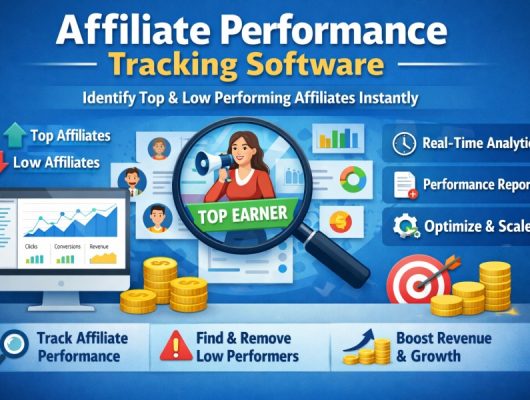
With dedicated partner marketing software, brands can automate onboarding, reporting, and payouts. Instead of juggling multiple tools, teams manage everything within a single dashboard.
Therefore, operations become efficient, measurable, and easier to scale.
Affiliate Marketing vs. Traditional Advertising
Although both strategies drive traffic, their structures differ significantly.
Paid advertising requires continuous investment. Once campaigns stop, traffic declines. In contrast, affiliate partnerships focus on long-term collaboration.
Moreover, affiliate marketing aligns costs directly with performance. This makes revenue forecasting more predictable and sustainable.
While advertising remains valuable for short-term campaigns, partner-driven growth offers stronger long-term scalability.
Why E-Commerce Brands Are Investing in Affiliate Infrastructure
As brands grow, managing partners manually becomes increasingly complex. Therefore, leading e-commerce companies are investing in advanced tracking systems, fraud prevention tools, and automated commission management.As competition increases, many brands are strengthening their affiliate ecosystems to create predictable, performance-based revenue channels.
Because of these upgrades, they gain full visibility into partner performance. Additionally, data-driven insights allow continuous optimization.
Ultimately, structured systems transform affiliate programs into predictable revenue channels rather than experimental tactics.
Conclusion: Building a Sustainable Growth Engine
Affiliate marketing is no longer just a supplementary tactic. Instead, Affiliate Marketing for E-Commerce Growth represents a long-term strategy built on performance, partnerships, and scalability.
When supported by the right infrastructure, this model becomes automated, measurable, and highly cost-efficient. As a result, brands achieve sustainable expansion while maintaining control over acquisition costs.
Businesses that invest in structured partner ecosystems position themselves for consistent, performance-driven growth in an increasingly competitive digital marketplace.